
Breaking Silos: Turning Agri-Food Systems Talk into Joint Action
At a workshop in Berlin, 45 Partners for Change ambassadors explored how governments, civil society, and the private sector can turn food systems discussions into coordinated action
The Added Value of This Article
Hover over to have a look!Value add for readers
- You gain practical insight into how combining financial support, capacity-building, and networking can effectively increase women’s participation and influence in multilateral processes.
- The example of CRIC23 offers a replicable model for designing initiatives that remove structural barriers and strengthen meaningful participation in international policy settings.
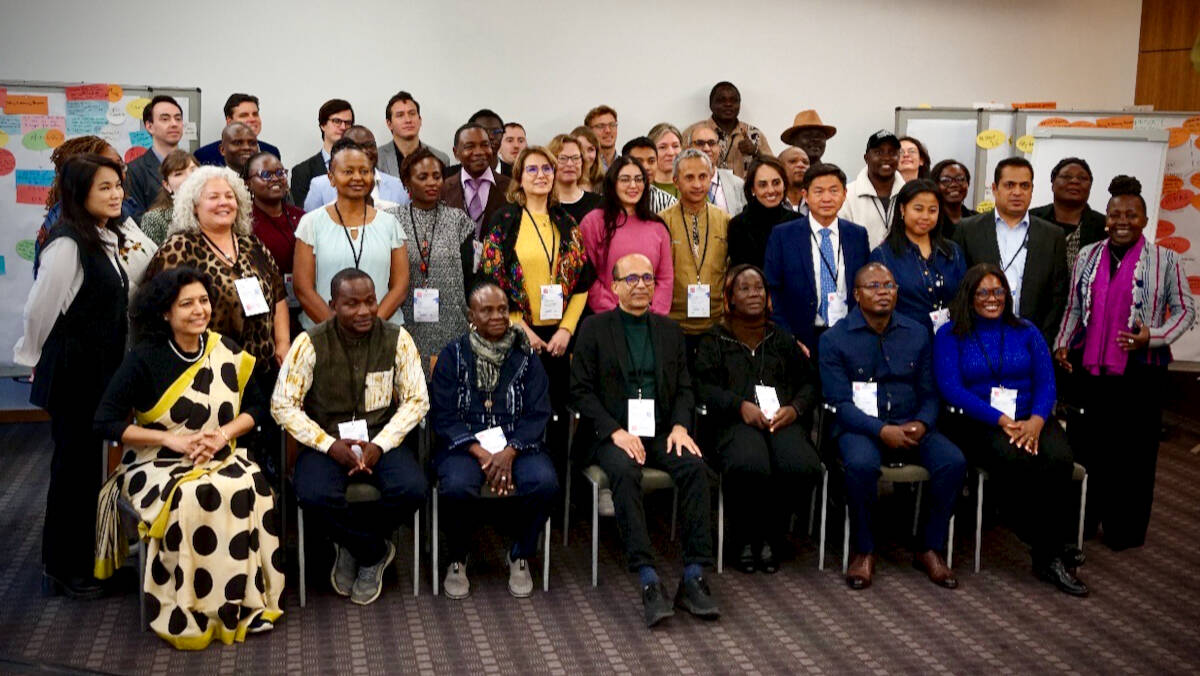
P4C Network Workshop in Berlin, January 2026 ⎮ Photo: © Jil Schütze / GIZ
In a field where initiatives often remain fragmented, the Partners for Change (P4C) Network was designed to do the opposite. Launched in 2023 as a BMZ-led multi-stakeholder initiative under the theme Life without Hunger: Transformation of Agricultural and Food Systems, P4C connects political partners, civil society, and private sector actors across more than 40 countries to strengthen coordinated action and policy influence.
In January 2026, the network took an important step from dialogue toward implementation. At the P4C Ambassador Workshop in Berlin, 45 ambassadors from civil society, government, and the private sector across Africa, Asia, Europe, and Latin America came together.
The workshop confirmed broad support for the transformation approach captured in the P4C Synthesis Paper, which now serves as a shared reference point for the network. The focus is increasingly shifting toward political translation and operationalisation: turning insights into policy-ready messages, identifying clear entry points for reform, and coordinating advocacy efforts across actors.
Why collaboration between sectors matters
One of the central conclusions of the workshop was clear: food systems transformation cannot succeed without balanced cooperation between three key actors.
- The state sets direction and creates the enabling environment.
- Civil society ensures inclusion and accountability.
- The private sector invests, innovates, and generates sustainable value.
Participants stressed that real progress begins when these actors move beyond institutional silos and start working toward shared delivery and accountability.
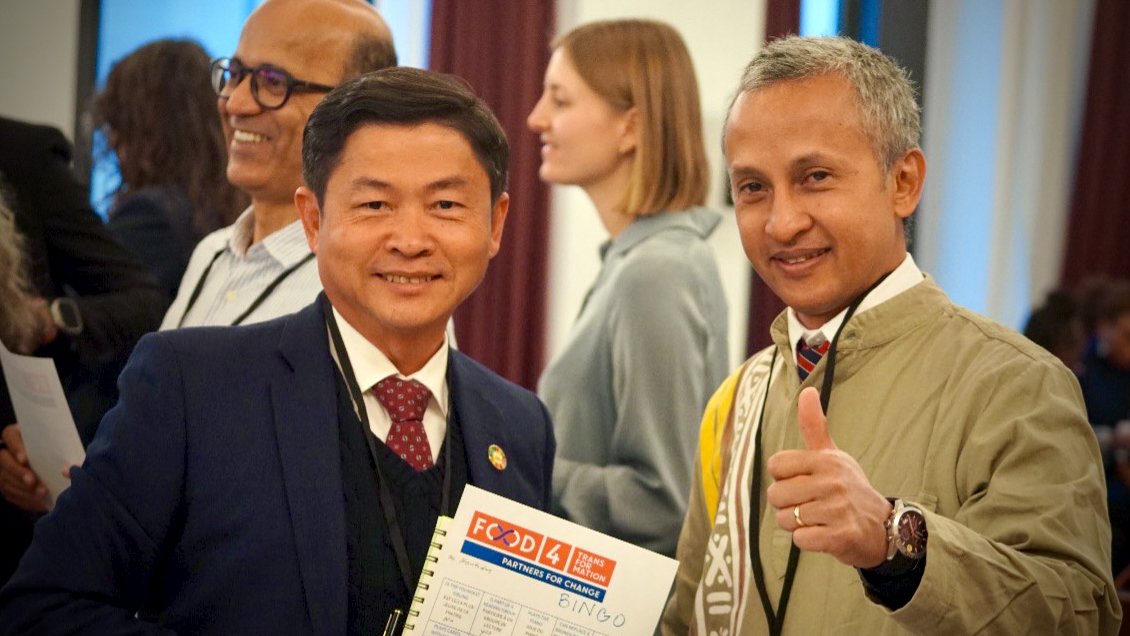
Sok Silo (left) and Harifidy R. Ratsimba (right) at
the P4C Ambassador Workshop⎮ Photo: © Jil Schütze / GIZ
Six foundations for resilient food systems
The workshop also put system fundamentals front and centre. To improve food and agriculture systems in ways that deliver now, protect people and ecosystems, and withstand future shocks, countries need to strengthen six building blocks.
- Infrastructure
- Information and education
- The food environment
- Money and credit
- Asset ownership
- How markets work
This requires sustained investment in human capital, innovation, and adaptability. It also means pursuing transformation beyond productivity, embedding safety and sustainability as core outcomes.
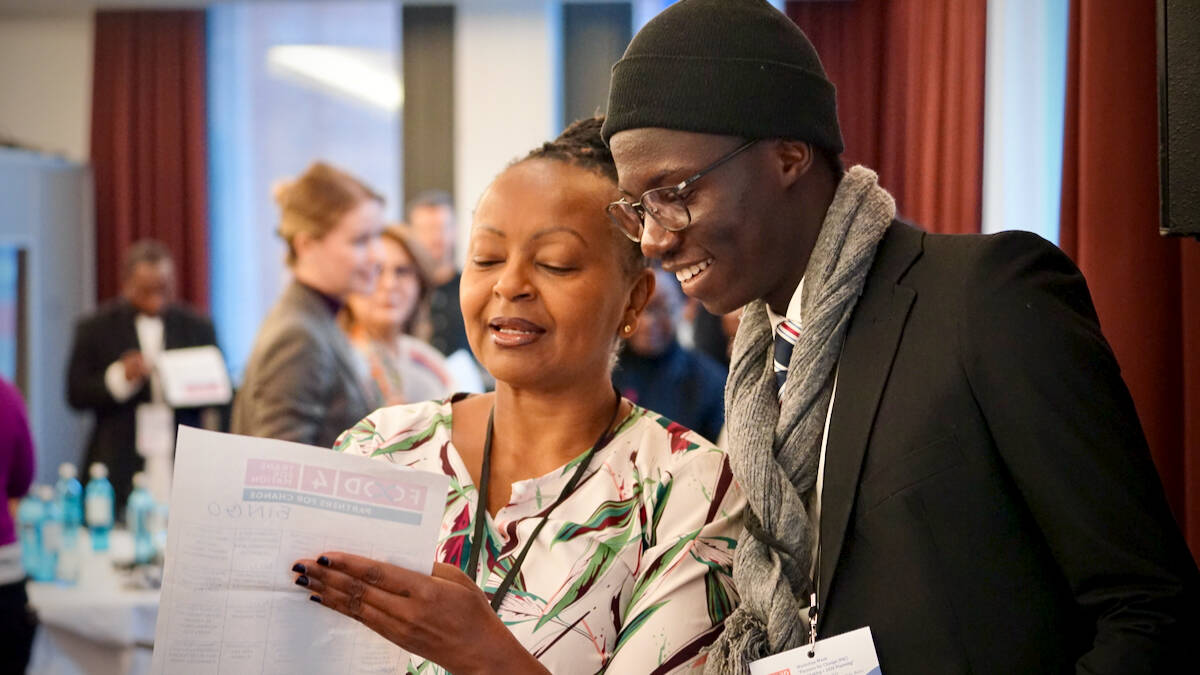

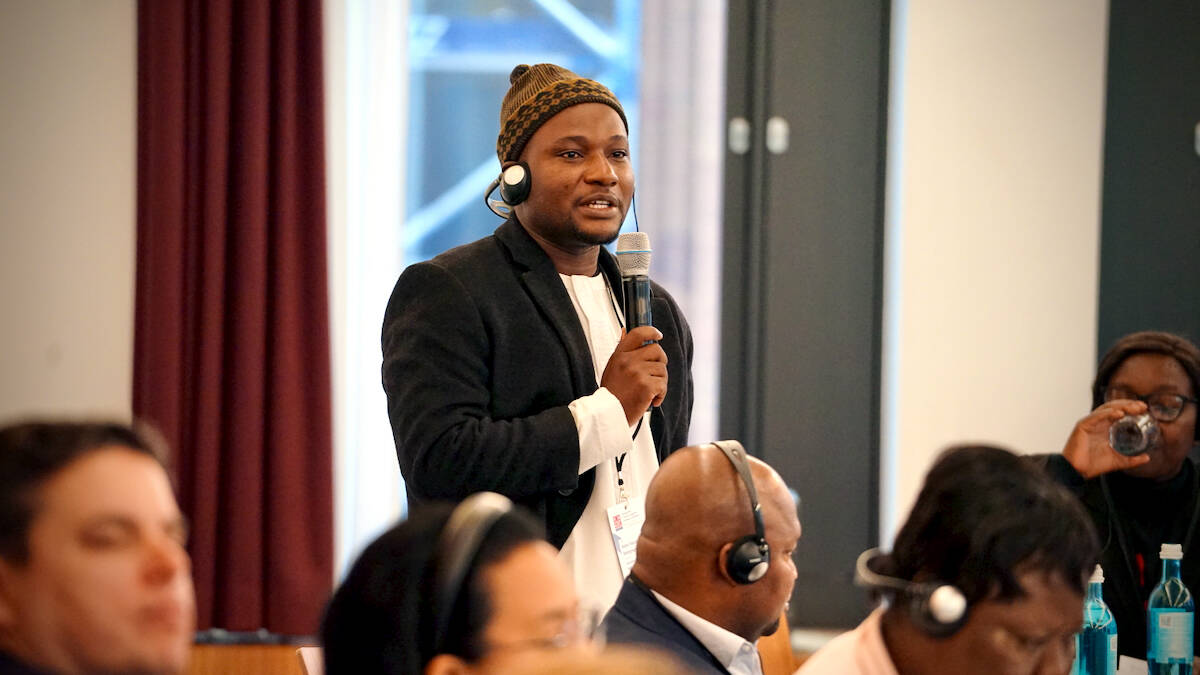
At the P4C Ambassador Workshop: 1. Junnie Wangari (left) and Lucky Andrianirina (right), 2. Thérèse Coulidiati, 3. Abdoul-Razack Belemgnegre ⎮ Photos: © Jil Schütze / GIZ
Practical levers for transformation as opposed to optional extras
Across discussions, four practical levers repeatedly emerged as critical for transformation pathways that are feasible at scale: soil health, water, technology, and access to appropriate land.
Participants noted that progress in these areas can substantially strengthen food system resilience and improve livelihoods across agricultural value chains.
Next step for the P4C network
The P4C Network Conference, scheduled for 23–25 June 2026 in Berlin, will build on the outcomes of the ambassador workshop.
The conference aims to translate accumulated insights into concrete advocacy priorities and implementation pathways, while strengthening coordination among partners engaging in global and regional food systems policy processes.
Additional Information
For more information, please contact: Jil Schütze, jil.schuetze@giz.de
Follow Food for Transformation / Partners for Change on LinkedIn: https://www.linkedin.com/company/food-for-transformation/
