Why Rangelands Matter for Food Systems Transformation in Africa
Sustainable livestock systems link land, livelihoods and food security
The Added Value of This Article
Hover over to have a look!Value add for readers
- You gain a clearer understanding of why rangelands are foundational to food and nutrition security in many African contexts — and why livestock must be considered part of their sustainable management.
-
You learn why transforming livestock systems is essential to balancing food production with climate and biodiversity goals in rangeland-based production systems.
Visual: © GIZ / Roberto Marcon
Rangelands sustain food systems, livelihoods and ecosystems across vast parts of Africa — yet they are under growing pressure from climate change, land degradation and competing land uses. As demand for livestock products rises, these landscapes face the dual challenge of supporting food security while maintaining biodiversity and climate resilience.
This article explains why rangelands are central to food systems transformation and how more sustainable livestock systems, supported through policy and financing initiatives and the LiveSys project, can help secure their future.
Rangelands: extent, ecosystems and functions
Rangelands cover up to 54% of the global land surface. They include grasslands, shrublands, woodlands and wetlands, encompassing ecosystems such as savannas, steppes and tundra, and host significant biodiversity. Rangelands provide key ecosystem services, including carbon storage in soils, as well as protection against desertification, erosion, and flooding.
Pastoralism is one of the oldest forms of land use adapted to rangeland ecosystems. Pastoral and agro-pastoral systems manage nearly 500 million hectares worldwide, often in areas unsuitable for crop production, and support livelihoods through extensive livestock production. In many contexts, livestock plays an important role in the functioning of rangeland ecosystems, which store around 30% of global soil organic carbon and host up to 35% of terrestrial biodiversity. Mobile pastoral systems, for example, can support ecological processes and create fertile hotspots across rangelands through herd mobility and grazing dynamics.
Livestock, food security and livelihoods
Grazing-based livestock systems on rangelands support more than 200 million households, while over two billion people depend indirectly on rangelands for food, income and related services. In Sub-Saharan Africa, livestock contributes to the livelihoods of approximately 80% of poor households. Particularly in drylands, mobile livestock systems play a key role in food security by providing high-quality protein and essential micronutrients. For smallholders, agro-pastoral and pastoral households, animals also serve as assets for income generation, savings and risk management, thereby contributing to poverty reduction. Women benefit in particular from livestock ownership, which can improve nutrition, income and socio-economic conditions at the household level.
Beyond economic value, livestock systems are closely linked to cultural identity, social organisation and local and indigenous knowledge.
Pressures on rangeland-based systems
According to the United Nations Convention to Combat Desertification (UNCCD), up to 50% of rangelands globally are affected by degradation, resulting in reduced biological and economic productivity. Drivers include climate change and variability, droughts, desertification, and invasive species. Land-use change, conversion to cropland, infrastructure development, restricted access to grazing areas and the weakening of sustainable grazing management practices are further driving forces.
Rangeland degradation reduces forage availability and livestock productivity, increasing socio-economic pressure on pastoral communities. In many African regions, competition over land has intensified due to agricultural expansion, mining, infrastructure projects and protected areas, placing strain on long-standing social relations between sedentary farmers and pastoralist communities. Limited recognition of land tenure and grazing rights for mobile pastoralists, together with border closures and political instability, further constrain traditional transboundary mobility and social stability, particularly in the Sahel.
Livestock systems and sustainability challenges
Livestock production is essential for food security but is also associated with environmental and health challenges. Globally, intensive livestock systems account for 11–17% of anthropogenic greenhouse gas emissions and contribute to land degradation and biodiversity loss. Around 80% of agricultural land is used as pasture or for feed production, increasing pressure on forests and savanna ecosystems.
At the same time, demand for meat and dairy products is expected to double by 2050, particularly in the Global South. This reinforces the need to transform livestock systems in ways that are context-specific and aligned with environmental constraints.
Sustainable livestock systems and rangeland management
Extensive livestock systems, e.g. pastoralism, have long been adapted to rangeland environments and provide important ecosystem services while securing food and livelihoods. Today, climate change, biodiversity loss, land-use change, and changing economic and governance conditions are increasingly challenging these systems. To sustain their contribution to food security and poverty reduction, the sustainable design of livestock systems and investments in it is therefore an important lever.
There is no one-size-fits-all approach to sustainable livestock management. Practices need to be designed in line with site-specific contexts and involve relevant stakeholders, including women, youth and indigenous peoples, while addressing tenure issues and secure access to land. In this context, climate-resilient and low-emission livestock practices, including improved animal health, offer a greenhouse gas mitigation potential of up to 30%.
Policy and financing support
The Global Project “Transformation towards Sustainable Livestock Systems (LiveSys)” aims to support global, regional and national decision-makers in strengthening the integration of climate and biodiversity protection, climate change adaptation and rangeland restoration into livestock-related policy and financing instruments in Africa and Latin America. Through this approach, the project contributes to the protection of global public goods as well as to poverty and hunger reduction and the strengthening of resilience.

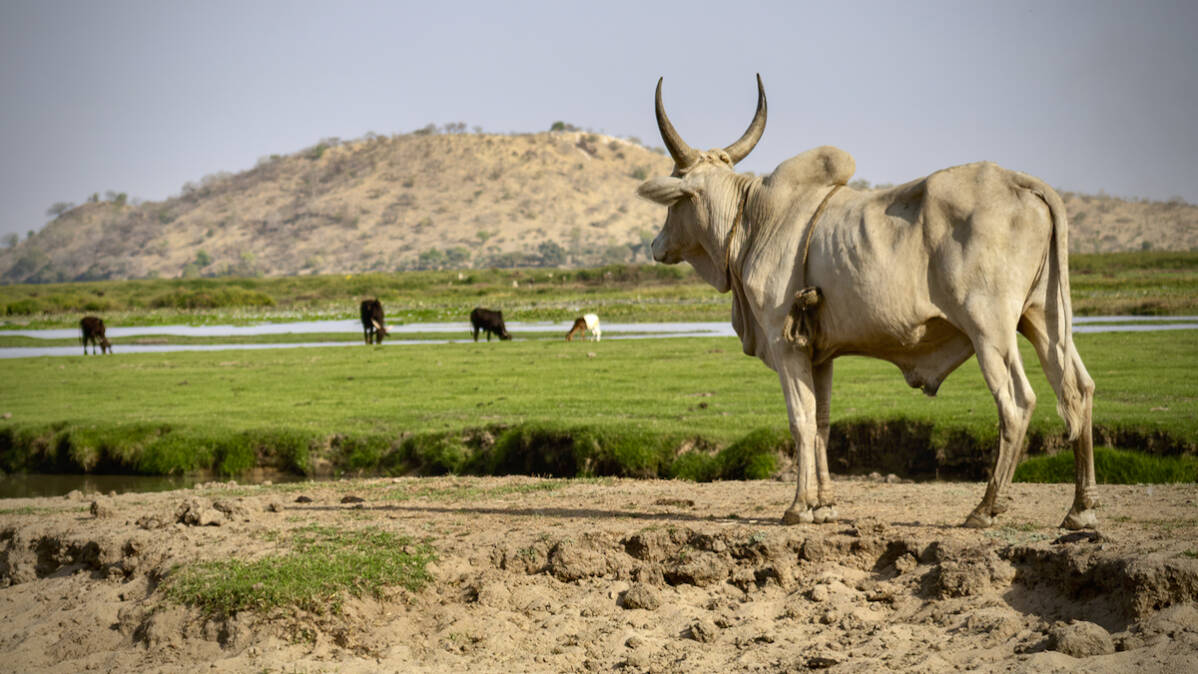
During the dry season near Léré in southern Chad, local residents and transhumant herders bring their cattle to Lake Léré and the Mayo-Kebbi River. Even after months of drought, the green along the shores provides vital grazing and farmland year-round. The animals depicted are a local variation of Zebu cattle. ⎮ Visual: © GIZ / Giovanni Frescura
The United Nations has designated 2026 as the International Year of Rangelands and Pastoralists, drawing global attention to rangelands, their ecological importance and the livelihoods they support. In the context of this and the emerging global initiatives on rangeland restoration, the project contributes to strengthening the economic and political recognition of rangelands and pastoral systems.
Additional materials
- GV Catalyzing transformation towards sustainable livestock systems | GIZ
- Home | International Year of Rangelands and Pastoralists 2026 | FAO
- Introduction to a new narrative for livestock and biodiversity
Contact
Birthe Paul, Head of Global Project on Catalyzing Transformation towards Sustainable Livestock Systems (LiveSys), birthe.paul@giz.de
About
The article builds on discussions from the June SNRD Conference and is led by the Food and Nutrition Security Working Group under the topic Advancing Food Systems Transformation Across Africa.
