
🌱 Planting Change Together
How Uganda’s Green Schools Are Restoring Landscapes
The Added Value of This Article
Hover over to have a look!Value add for readers
-
Shows how small budgets can spark big change
-
Demonstrates a replicable model of cross-project collaboration
-
Combines restoration, education, and income generation
-
Strengthens communities while restoring landscapes
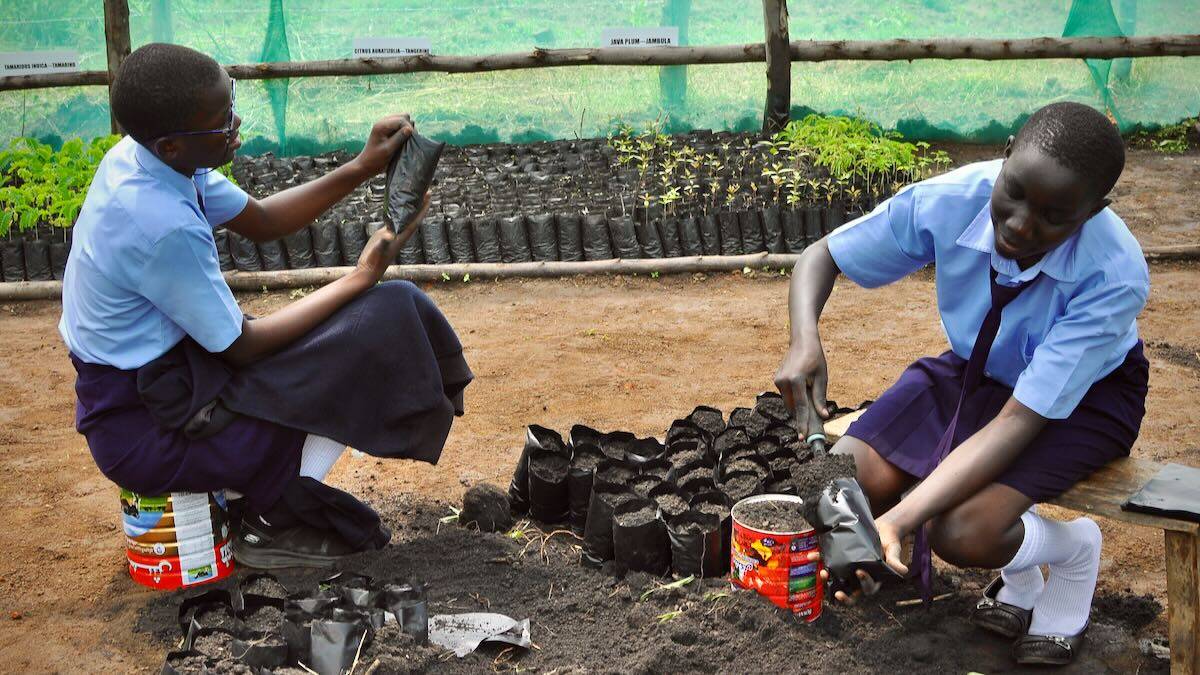
Students preparing the seedlings⎮ Visual: © GIZ
In Northern Uganda, colleagues from three GIZ projects joined forces with schools and local partners to launch the Green Schools for Climate Action Project. By combining restoration with education, the initiative established student-led nurseries, produced over 5,000 seedlings, and turned schools into green hubs of community transformation.
A School-Led Model for Restoration
Six colleagues from different GIZ projects — Emmanuel Asiku, Fred Opiyo, Simon Akena, Grace Lawino, Bernard Nsubuga, and Geoffrey Obaa — decided to join forces under the Climate & Nature Working Group of SNRD Africa. With only €9,900, they transformed an idea into a thriving restoration and awareness initiative: the Northern Uganda Green Schools for Climate Action Project. The activities were 100% financed by SNRD Africa and kicked off by the Climate and Nature working group. The Green Team Uganda had won a task team fund.
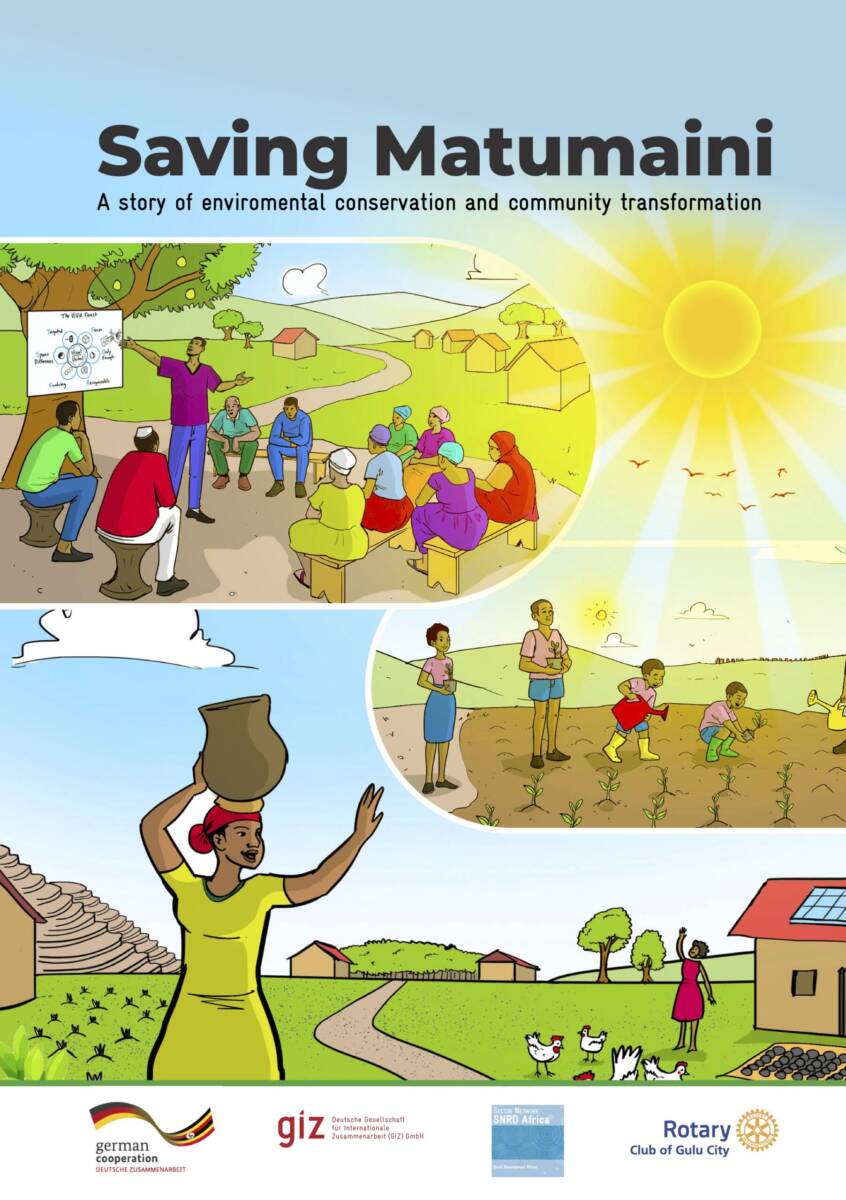
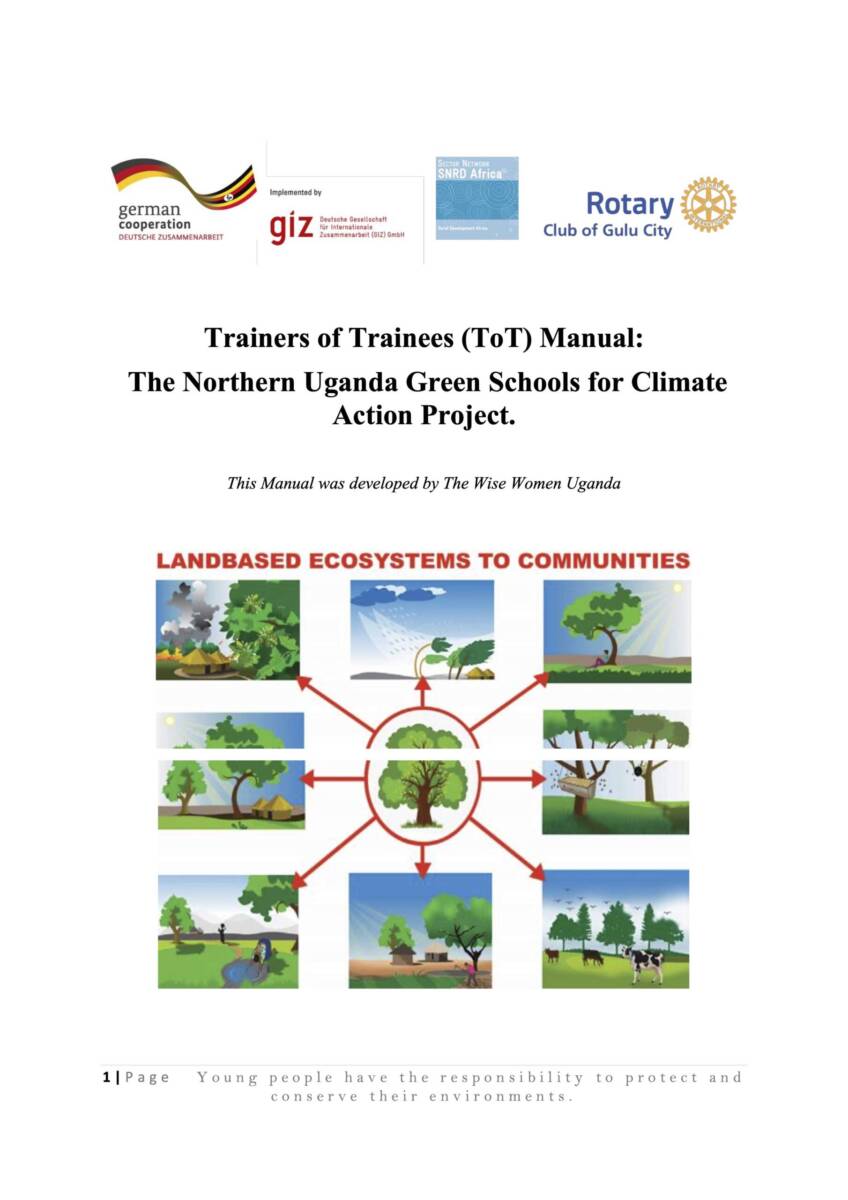
The approach is simple but powerful: school-led nurseries combined with climate awareness materials. Students were trained in nursery management, tree planting, and agroforestry practices—skills that extend far beyond the classroom. A climate comic book, Saving Matumaini, reinforced the message of conservation and community transformation.
Tangible Results
From the first round of nurseries alone, more than 5,000 seedlings were raised.
🌳 Restoration & income: 800 seedlings were planted in school woodlots, while the rest are sold to local households at affordable prices.
🍎 Better nutrition: Fruit trees contribute to healthier school diets.
💶 Sustainability: Seedling sales provide schools with additional income.
📚 Education: Students integrate hands-on climate action into their school curriculum.
Collaboration Across Projects
This project came to life because three very different GIZ projects—PRUDEV, BMM, and WE4D—pooled their expertise, time, and networks. By bridging mandates and resources, they demonstrated how much can be achieved when working across project boundaries.
Key partners included the Rotary Club of Gulu City, the National Forestry Authority, and the school communities, all contributing to a package that combines environmental restoration, income generation, and climate awareness.
Looking Ahead
The Green Schools for Climate Action Project is more than a pilot. It’s a scalable model showing how schools can become centers of resilience, sustainability, and community-driven change. With every seedling sold, Uganda is building a greener future—one tree at a time.


A joint visit by GIZ & Rotary to the school’s nursery bed; watering Markamie Lutea seedlings (a native tree); nursery with fencing protective against goats, larger insects and direct exposure to sunlight⎮ Photos: © GIZ
Additional information
Saving Matumaini Comic Book — A story of environmental conservation and community transformation
Contact
Emmanuel Asiku, Technical Advisor Better Migration Management Programme, emmanuel.asiku@giz.de
