Nutrition Lives On: Lessons from the Global Programme on Food and Nutrition Security
How proven approaches continue through national systems, new projects and a modular nutrition toolkit
The Added Value of This Article
Hover over to have a look!Value add for readers
- How successful nutrition approaches can be anchored in national systems so they continue after a programme ends.
-
How new projects and a modular nutrition toolkit build on earlier experience to strengthen nutrition across sectors.
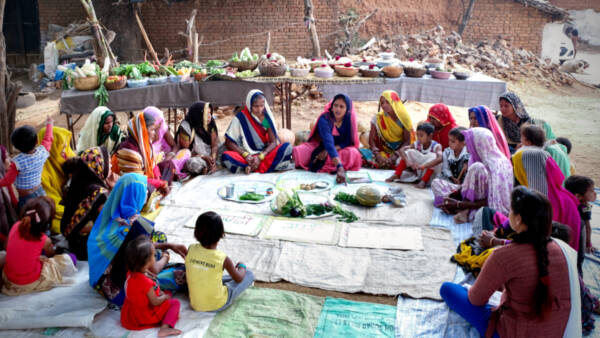
Nutrition education in a women’s group in India ⎮ Visual: © GIZ
Every programme eventually comes to an end. With a total volume of around 287 million euros, the Global Programme Food and Nutrition Security, Enhanced Resilience was one of the largest initiatives implemented by GIZ in this field. Over the years, it improved access to sufficient and healthy food for 5.4 million people in twelve countries.
At the closing conference in Bonn in December 2025, more than one hundred representatives from politics, science, business and civil society gathered to reflect on what had been achieved. Yet the central message of the event was not only about results. Many of the approaches developed through the programme have become embedded in partner countries and continue to shape food and nutrition efforts beyond the programme itself.
From local innovation to national practice
Across the twelve partner countries, a wide range of approaches was developed and tested, from home gardens and food fortification to community initiatives such as Écoles des maris, which encourage men to play a stronger role in improving family nutrition.
These approaches were designed together with partner ministries, civil society organisations and research institutions. Over time, several proved effective enough to become integrated into national programmes and policies.
One example comes from Burkina Faso, where women’s groups produce nutrient-rich flour mixtures using locally available ingredients. The mixtures can be stored for several months and make it possible to prepare healthy meals quickly. This improves child nutrition while reducing the time women spend on daily food preparation.
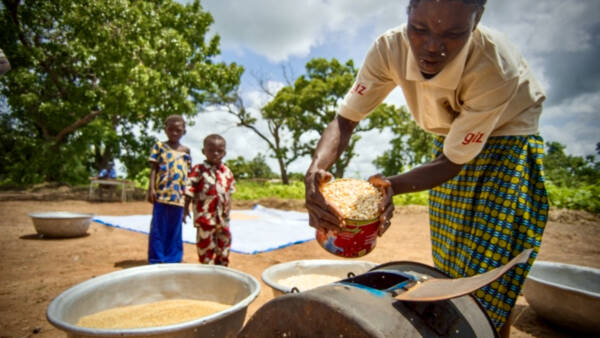
Production of nutrient-rich flour mixtures in Burkina Faso ⎮ Visual: © Michael Jooss/GIZ
The time saved benefits households in several ways, including by creating additional opportunities to generate income.
Ensuring that such approaches continue after a project ends requires strong institutional structures. For many years, Burkina Faso lacked a central overview of which nutrition interventions were most effective and how they could be replicated.
With support from GIZ, the Ministry of Health has therefore introduced a new mechanism. Each year, organisations working in food and nutrition security can submit particularly successful approaches. A multi-sectoral committee reviews these proposals according to common criteria and compiles the selected initiatives into a catalogue that functions as a practical reference for practitioners and decision-makers.
The catalogue is promoted through conferences, coordination committees and a widely used national online platform. It strengthens coordination within the food security sector and helps ensure that proven solutions reach a growing number of households.
Building on experience through new projects
The legacy of the programme is also visible in several new initiatives that build directly on its experience.
In Madagascar, the project Improving the food situation through agroecology and nutritional knowledge continues the work previously carried out in the coastal region in the south-east of the country. The project operates in neighbouring districts of the earlier intervention area and builds on proven approaches such as neighbourhood learning groups, which allow knowledge to spread gradually within communities.
At the same time, the project places a stronger emphasis on agricultural production and its economic potential. Policy dialogue with the government in the capital Antananarivo also continues, with partners working to establish new national standards, particularly for the fortification of food with micronutrients.
With a budget of 4.9 million euros over three years, the project is considerably smaller than its predecessor. Close cooperation with other initiatives in Madagascar, such as the soil health project Soil Matters, therefore plays an important role.
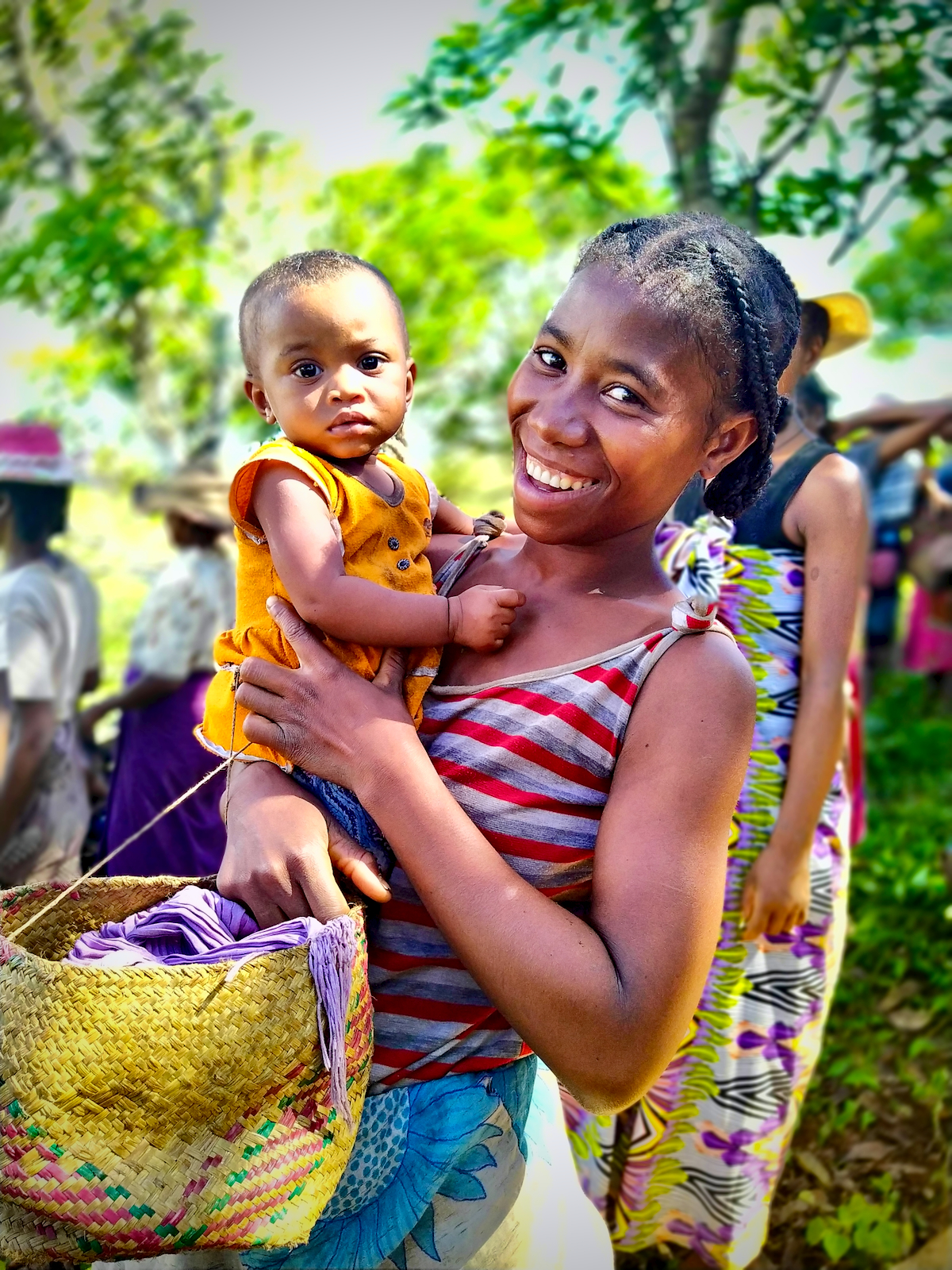
Mother with child in Madagascar ⎮ Visual: ©GIZ
In Malawi, the project Supporting the Transformation of Food Systems for Better Nutrition introduces a different focus. Launched in 2025, it centres on strengthening the ability of actors at district and national levels to guide food system transformation processes themselves.
The project promotes coordination between ministries, encourages systemic thinking in policy processes and places particular emphasis on increasing the participation of women in decision-making.
In Zambia, the bilateral project Food and Nutrition Security, Enhanced Resilience Plus (FANSER+) builds on earlier work and expands it further. From 2025 to 2028, the project will improve nutrition and resilience among vulnerable rural households, especially women and young children, in two provinces. With a budget of 16.5 million euros, the initiative combines climate-resilient agriculture, nutrition education and economic empowerment with a gender-transformative approach.
A modular approach to nutrition
In addition to these follow-up projects, the programme has also produced a new instrument designed for use across sectors: Modular Nutrition Actions.
This initiative provides a flexible toolkit of six nutrition modules that can be integrated into existing development programmes. Drawing on many years of experience, the modules make it easier for initiatives in agriculture, health, social protection or climate adaptation to strengthen their contribution to improved nutrition.
The modules focus on:
- nutrition-sensitive agriculture, fisheries and value chains
- nutrition in basic health services
- markets and food environments for healthy nutrition
- food and nutrition security in the context of climate change
- nutrition-sensitive social protection
- large-scale food fortification
These thematic areas are complemented by three cross-cutting catalysts: gender and inclusion, nutrition governance, and social and behaviour change.
The modules will initially be implemented in India, Malawi, Nigeria and Togo. With co-financing from the Gates Foundation, additional activities are planned in West Africa and Madagascar.
The idea behind this approach is simple: improving nutrition requires coordinated action across multiple sectors. By providing practical entry points for existing programmes, Modular Nutrition Actions aim to help translate this principle into everyday development practice.
Additional information
- Global Programme Food and Nutrition Security, Enhanced Resilience: Global programme Food and Nutrition Security, Enhanced Resilience | GIZ
- FANSER+: Food and Nutrition Security, enhanced Resilience in Zambia (FANSER plus) | GIZ
- STEP UP! Malawi: giz2025-en-official-step-factsheet.pdf
- Global Programme Modular Nutrition Actions: Global Programme Modular Nutrition Actions (MoNA) | GIZ
- GV Catalyzing transformation towards sustainable livestock systems | GIZ
- Home | International Year of Rangelands and Pastoralists 2026 | FAO
- Introduction to a new narrative for livestock and biodiversity
Authors
Bastian Beege, Kristina Rauland-Yambré, Rike Riesmeier
