Making Gender-Transformative Change Measurable
Evidence and a compendium of indicators
The Added Value of This Article
Hover over to have a look!What You Get From This Study
- Evidence on how gender-transformative approaches are implemented and measured across GIZ agriculture and food systems projects
- Insights into the challenges of measuring complex, context-specific and non-linear gender-transformative change
- A practical compendium of adaptable indicators for measuring changes in agency, gender relations, social norms and structural conditions
- Practical orientation for integrating gender-transformative indicators into project design, results matrices and monitoring systems
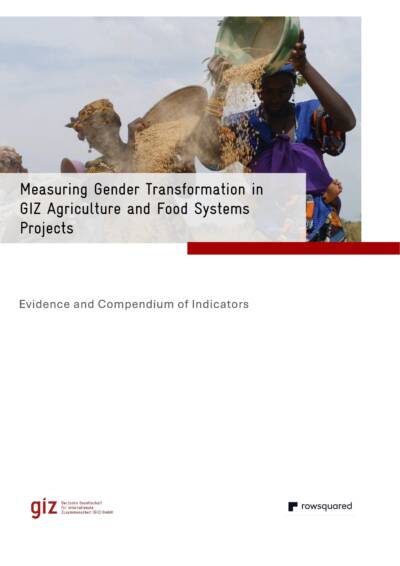
Visual: © GIZ
Ever wondered how to tell whether your project is actually contributing to gender-transformative change?
Women play a central role throughout agriculture and food systems. Yet unequal access to resources, services and decision-making continues to restrict their rights, agency and opportunities. Gender-transformative approaches seek to address the underlying causes of these inequalities, including discriminatory social norms and structural power imbalances.
But measuring this kind of change is not straightforward. Building on discussions within the SNRD Gender Transformative Approaches Working Group and the need for more practical orientation on monitoring gender-transformative change, FemHub commissioned this study to provide both evidence and practical guidance for project teams.
The study examines how gender-transformative approaches are currently implemented and measured in practice. It draws on a review of 28 GIZ agriculture and food systems projects and an in-depth analysis of seven selected projects, including interviews and focus group discussions with project staff and implementing partners.
At the heart of the publication is a compendium of indicators. It supports project teams in moving beyond indicators that merely count how many women have been reached and towards measuring meaningful changes in areas such as women’s agency, decision-making power, gender relations, social norms and structural conditions.
Download
About
The study was commissioned by the GIZ project Feminist Approaches to Resilient Agriculture and Food Systems (FemHub) on behalf of the German Federal Ministry for Economic Cooperation and Development (BMZ) and conducted by rowsquared.
Contact
Janna Vogel (janna.vogel@giz.de) and Birte Brecht-Drouart (birte.brecht-drouart@giz.de)
