Let’s Rethink Fish 🐟 — Sustainable Solutions to Global Challenges
How sustainable fishery and aquaculture make an impact far beyond the plate
The Added Value of This Article
Hover over to have a look!Value add for readers
- See how people around the world are shaping a fairer, more sustainable future for fish and those depending on them.
- Stories of coastal communities taking action to protect their waters and securing healthy food for all.
- Discover how small changes in the way we produce and consume fish can make a big difference for people and the planet.
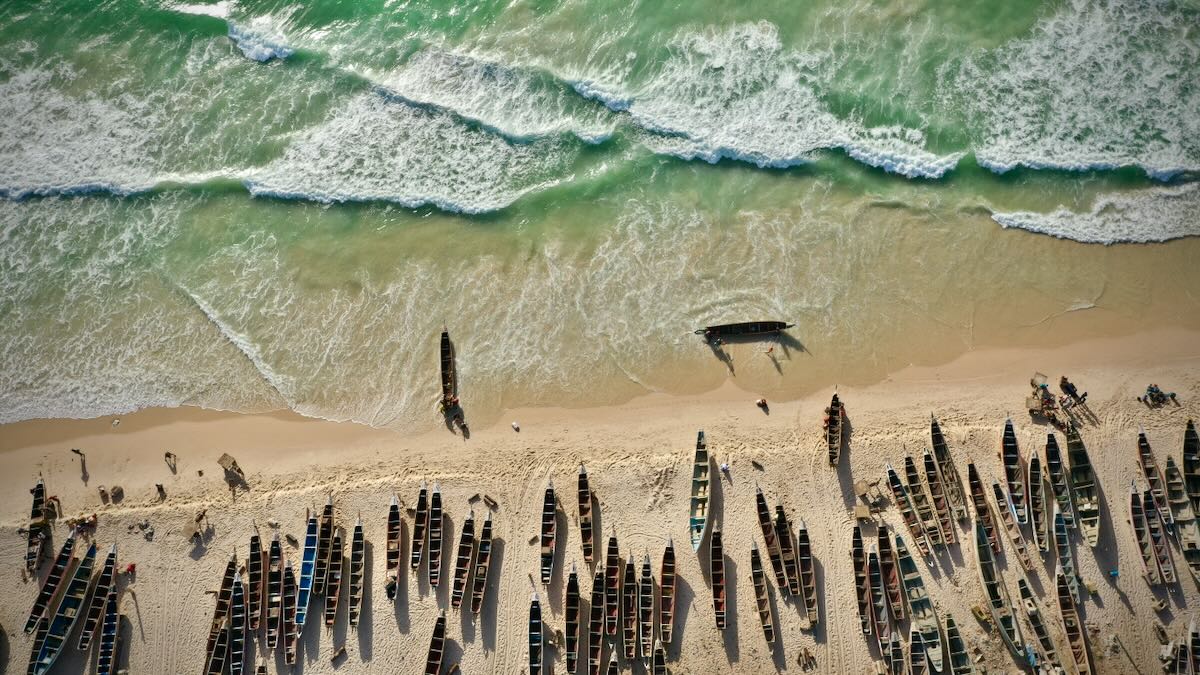
Fishing boats in Mauritania ⎮ Photo: © GIZ
Fish and other aquatic foods nourish billions of people. They bring essential protein, key micronutrients, and healthy fats to diets around the world — helping communities fight hunger and malnutrition, especially in low- and middle-income countries.
But their impact goes far beyond nutrition. Fisheries and aquaculture provide jobs, income, and stability for millions of families, forming the backbone of many coastal and rural economies. With aquaculture now producing more than half of all aquatic foods consumed globally, the sector plays a decisive role in meeting the world’s growing appetite for sustainable food.
Managing fisheries and aquaculture responsibly is therefore not just about protecting the oceans — it’s about securing food, livelihoods, and a healthier future for all.
Fueling Health and Resilience Worldwide

Pond operator preparing his net for fingerling harvesting at Bunda fish farm, Malawi
© Marving Kaulembe, GIZ-AVCP
Fish and other aquatic foods play a crucial role in feeding the world. According to the Food and Agriculture Organization (FAO), they provided at least 20% of all animal protein for 3.2 billion people in 2021 — a lifeline for communities that depend on them for both nutrition and
income.
Beyond protein, aquatic foods deliver essential omega-3 fatty acids, vitamins, and minerals that strengthen the immune system, support brain and heart health, and help prevent chronic diseases.
Global consumption of aquatic foods continues to rise — from just over 9 kilograms per person in 1961 to more than 20 kilograms today. Together, fish and seafood now supply around 15% of all animal protein consumed worldwide, offering one of the most efficient and nutritious sources of food we have.
The People Behind the Catch

Women fish farmers preparing for fish harvesting using traditional equipments in India
Visual: © GIZ
Fisheries and aquaculture are lifelines for millions of people around the world. In 2022, they directly employed more than 61 million workers — from fishers and farmers to processors and traders. The vast majority of these jobs are in Asia, followed by Africa and Latin America, where aquatic foods form the backbone of local economies.
Women play a vital role across the value chain. They make up nearly a quarter of the primary workforce and over 60% of those in post-harvest processing and trade — driving both community well-being and economic resilience.
Altogether, around 600 million people depend on fisheries and aquaculture for their livelihoods, most of them in small-scale operations. For these communities, sustainable management isn’t just an environmental goal — it’s a path to stability, dignity, and opportunity.
A Growing Force in the Global Economy

Fish market in Odisha, India ⎮ Visual: © GIZ/Bettina Renner
Global fisheries and aquaculture reached a record production of 223 million tonnes in 2022, a 4.4% increase since 2020. This included 185 million tonnes of aquatic animals and nearly 38 million tonnes of algae — proof of the sector’s growing role in feeding and sustaining the world.
For the first time, aquaculture outpaced wild capture, providing more than half of all aquatic animal foods. Most of this production takes place in Asia, which accounts for around 70% of global output, followed by Europe and Latin America (9% each), Africa (7%), North America
(3%), and Oceania (1%).
At the first point of sale — when fishers and farmers sell their products before further processing — the total value reached an impressive USD 472 billion, with aquaculture contributing USD 313 billion. Behind these figures are millions of people whose work connects the ocean and the economy, turning aquatic resources into global prosperity.
Global Fish Production under Pressure

Port in Ghana ⎮ Visual: © Stop Illegal Fishing (SIF)
The global fisheries and aquaculture sector stands at a turning point. For the first time, farmed seafood production has surpassed wild catches — yet nearly 90% of global fish stocks are already fully exploited or overfished. Added pressures from climate change, pollution, biodiversity loss, and illegal fishing continue to strain aquatic ecosystems and the communities
that depend on them.
Meanwhile, demand for aquatic foods keeps growing as the world population moves toward nine billion by 2050. Feeding more people while protecting the planet will require food systems that are not only productive but also sustainable, resilient, and inclusive.
The Global Program Sustainable Fisheries and Aquaculture (GP Fish), implemented by GIZ on behalf of the German Federal Ministry for Economic Cooperation and Development (BMZ), addresses these challenges through targeted projects across seven countries in Africa and Asia. The program combines local action with global learning — turning experience on the ground into practical solutions.
A series of interlinked knowledge products highlights key insights from these projects. Each one explores a different dimension of sustainable aquatic food systems and shows how innovation and cooperation can make a lasting difference.
Multi-Stakeholder Platforms

Fishing community of Lake Bangweulu, Zambia, present to various stakeholders in the sector — Visual ©GIZ Zambia
MSPs unite government, private sector, and community actors to shape inclusive policies and joint solutions for sustainable fisheries and aquaculture.
Fish Hygiene and Quality

Fish market in Nouakchott, Mauritania — Visual ©GIZ
Hygiene and quality measures reduce post-harvest losses and improve food safety, ensuring that fish products reach consumers fresh and nutritious.
Learn how better handling and control systems secure healthy fish for all.
Training Approaches and Manuals

From theory to practice: hatchery operators in Phalombe district, Malawi, learn fish sampling, weighing, and measuring sizes of pond fish — Visual ©GIZ
Standardized and participatory training methods build technical, business, and adaptive skills for sustainable fisheries and aquaculture.
Learn how tailored training empowers farmers and strengthens local capacities.
Gender Transformative Approach

African Women Fish Processors and Traders Network Symposium in Kampala, 2019 — Visual ©GIZ Uganda
Empowering women across the fish value chain enhances leadership, equality, and economic resilience in fisheries and aquaculture. Recognizing and strengthening women’s roles is key to inclusive and sustainable growth.
Learn how gender-transformative approaches empower women and strengthen local economies.
Awareness and Behaviour Change

Recording of a live radio programme in Zambia — Visual ©GIZ Zambia
Communication campaigns raise public awareness of the nutritional importance of fish and promote sustainable consumption. Discover other media campaigns or read our publication Making the case for fish!
Adapting to Climate Change

Men plant trees as part of a reforestation effort to reduce erosion during intense rainfall — Visual ©Coeur de forêt
Climate-smart aquaculture strengthens the resilience of small-scale fish farmers through training, innovation, and nature-based solutions. Discover adaptive techniques for sustainable fish farming
Community-Based Management

Community gathering to elect fisheries management committee — Visual: ©GIZ Cambodia
Empowering communities to co-manage their fisheries strengthens local ownership, restores fish stocks, and secures livelihoods.
Learn how participation drives sustainable resource management.
Combating Illegal, Unreported and Unregulated Fishing

Artisanal fisherman with Nile perch caught on Lake Victoria, Uganda — Visual: ©GIZ Uganda
Collaborative action among communities, authorities, and researchers promotes legal, transparent, and sustainable fishing practices.
Learn how coordinated governance curbs illegal fishing and protects aquatic resources.
Together, these tools form a coherent framework for addressing overfishing, inequality, and climate impacts while enhancing food security and livelihoods. By linking field-level experience with policy dialogue, GIZ’s GP Fish helps partner countries build sustainable, inclusive, and climate-resilient aquatic food systems that can continue to feed and employ millions in the decades ahead.
Additional Information
Sources
- FAO Report: Global fisheries and aquaculture production reaches a new record high
- Oceans, Fisheries and Coastal Economies
- Review of the state of world marine fishery resources – 2025
Contact
Friederike Sorg, friederike.sorg@giz.de
