
Why Digital Agriculture Still Misses Women in Nigeria
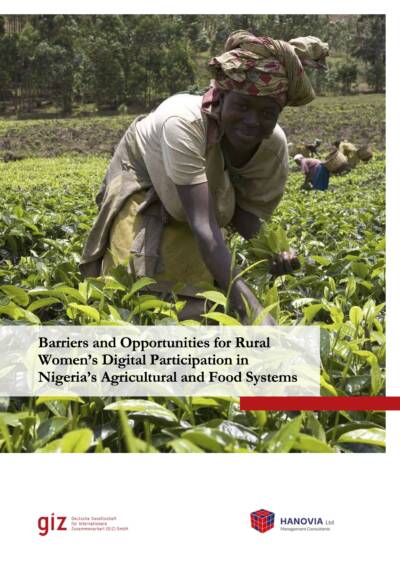
An ongoing study looks beyond access to understand the social barriers shaping digital inclusion in agri-food systems

Key Takeaways for Readers
Hover over to have a look!Key Takeaways for Readers
- Digital inclusion often fails when it focuses on access but ignores social dynamics and decision-making.
- Technology adoption depends as much on confidence and household roles as on infrastructure.
- Understanding behaviour early is key to designing solutions that actually scale.
⎮ Visual:©️Tima Miroshnichenko via Pexels
Digital solutions are expanding rapidly across Africa’s agri-food systems. Yet women remain underrepresented in their use.
An ongoing collaborative study led by FemHub and the SNRD Digital Working Group on Digital Transformation takes a closer look at why this gap persists. Rather than presenting results, the study sets out to better understand the social and behavioural dynamics that determine whether digital tools are actually used.
Currently underway in Ogun and Kaduna states in Nigeria, the research reflects a broader effort to move beyond assumptions and generate more grounded insights into the gender digital divide in agriculture.
Looking beyond access to understand real barriers
Building on existing research gaps, particularly around socio-cultural and psychological dimensions, the study explores what limits women’s engagement with digital technologies in agriculture.
It examines factors often overlooked in digitalisation efforts, including household decision-making, levels of digital self-efficacy, and the role of men as allies in enabling—or constraining—women’s participation.
This shifts the focus from infrastructure to behaviour, highlighting that access alone does not translate into meaningful use.
Combining data with lived experience
The study adopts a mixed-methods approach, combining desk research with field data collection through interviews and focus group discussions with farmers, agripreneurs, and key stakeholders.
From a technical perspective, it applies an intersectional and participatory research design. Variables such as digital access, usage patterns along value chains, digital self-efficacy, and socio-cultural constraints are analysed to build a more nuanced understanding of digital inclusion in rural contexts.
This approach allows the research to move beyond assumptions and ground its insights in lived realities.
A collaborative effort to inform future solutions
The study has been progressing over recent months through the contributions of a cross-regional team, reflecting the value of collaboration within the SNRD network.
Once completed, it is expected to generate gender-disaggregated insights and identify practical, scalable approaches to improve women’s participation in digital agriculture. These insights aim to inform more evidence-based, gender-responsive programming within GIZ and beyond.
For now, the study highlights an important shift already: moving from promoting digital tools to understanding how and why people actually use them.
Download
Contact
For more information, please contact yasmeen.fahmy@giz.de
