
How Malawi Is Turning Food Systems Governance into Practice
The Transformative Initiative Malawi and the STEP UP! project are strengthening coordination from national dialogue to district action
The Added Value of This Article
Hover over to have a look!Value add for readers
-
See how coordination mechanisms can make food systems governance work in practice.
-
Understand why linking national food systems dialogue with district-level action is essential for implementation.
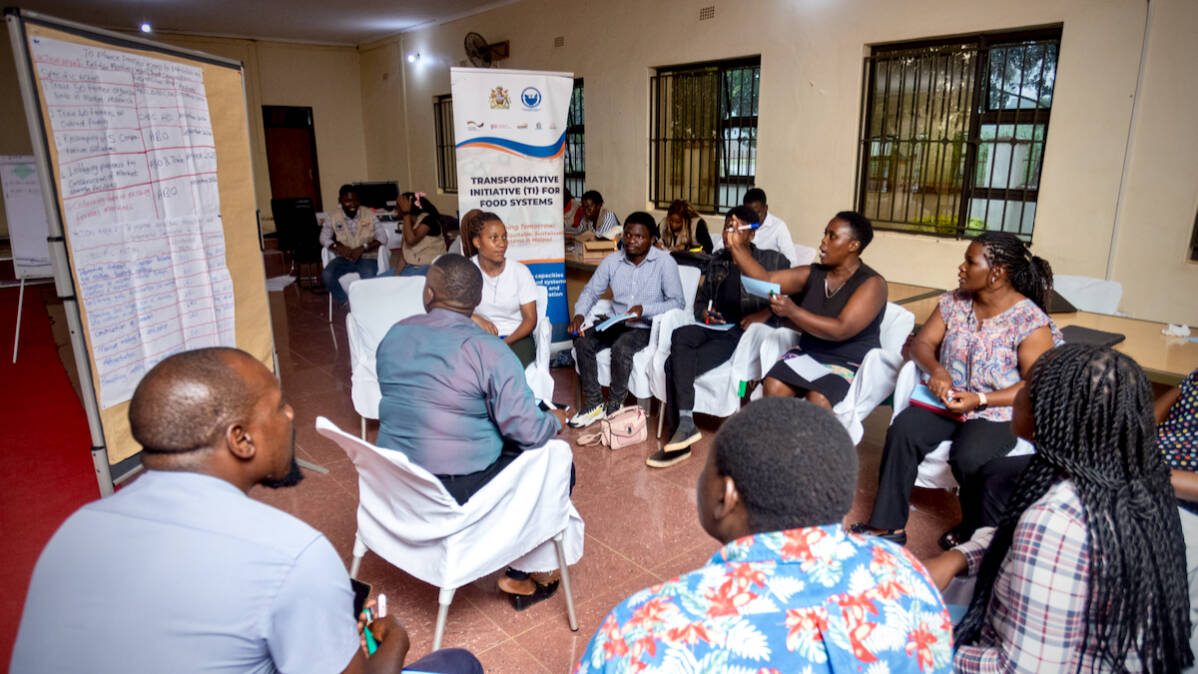
Visioning workshops with district CSOs and government officials holding dialogues
that address multi-lateral food systems bottlenecks ⎮ Visual: © GIZ/Transformative Initiative Malawi
Malawi’s experience shows that transforming food systems depends not only on policies but on how institutions and stakeholders coordinate in practice. Through the complementary work of the Transformative Initiative Malawi and the STEP UP! Project, civil society actors, government institutions, and district councils are strengthening governance mechanisms that connect national dialogue with local implementation.
Food systems transformation is increasingly recognised as essential for addressing persistent challenges affecting food security, nutrition, climate resilience, and rural livelihoods. Governance and coordination are therefore positioned at the heart of reform agendas under the Comprehensive Africa Agriculture Development Programme and the UN Food Systems Summit. Malawi’s experience provides practical insights into how these ambitions can be translated into concrete coordination mechanisms.
Strengthening coordination through civil society platforms
The Transformative Initiative Malawi, which brings together civil society actors, has played a critical role in strengthening coordination among the food systems convenor, development partners, researchers, academia, and district councils. The initiative raised awareness of food systems among relevant actors, particularly as the operationalisation of the national pathways and action tracks proved difficult due to limited coordination and governance structures.
Through civil society platforms, the initiative supported joint analysis of systemic bottlenecks and promoted greater coherence in planning and implementation. The lack of coordination had become evident, and efforts therefore focused on reducing fragmentation and fostering a shared understanding of the governance mechanisms needed for food systems transformation.
To address these gaps, the Transformative Initiative focused on strengthening capacities so that actors in government and civil society could better understand food systems and the interconnected roles required to achieve transformation. The initiative also invested in advocacy, recognising that transformation ultimately depends on the engagement of people and local actors. Awareness-raising and dialogue helped communities explore strategies for transforming local food systems using locally available resources.
Policy engagement was another priority, as effective and complementary policies are necessary to enable long-term transformation. At the same time, networking and outreach helped ensure that stakeholder collaboration moved beyond discussion into practical coordination. Through these joint efforts, the food systems convenor and relevant stakeholders were able to present a common position and highlight the need to extend coordination mechanisms to the decentralised level. Analytical work conducted through the initiative further showed that existing institutional arrangements were limiting effective coordination.
Linking national dialogue with district-level action
The STEP UP! project builds on this work by helping address institutional coordination gaps at both national and district levels. Consultations revealed a clear need for more formalised governance structures across different levels of the food system. In many cases, state institutions lacked multi-stakeholder platforms that could integrate the various elements of food systems.
STEP UP! therefore supports a governance framework that connects agriculture, nutrition, climate change, trade, gender, livelihoods, and social protection. This integrated approach aims to strengthen healthy diets, improve resilience, and contribute to sustainable graduation pathways.
Coordination at district councils helps ensure that community priorities are reflected in local planning processes, while structured feedback mechanisms allow district-level evidence to inform national dialogue platforms. This reinforces the importance of a bottom-up approach to food systems governance.
The joint efforts of both projects demonstrate that food systems transformation is not a single intervention but a continuous process of alignment and learning. Multi-sectoral stocktaking, evidence generation, research, and community engagement help ensure that national pathways can be implemented more effectively. By integrating coordination, evidence, and implementation, food systems governance moves from concept to practice.
Malawi’s experience shows that food systems transformation depends on sustained coordination, solid evidence, and strong links between national dialogue and local action. Through the convening and evidence-led advocacy of the Transformative Initiative Malawi, combined with STEP UP!’s district-level implementation and learning processes, food systems governance is increasingly becoming operational rather than aspirational. As SNRD Africa continues to promote cross-country learning and dialogue, Malawi’s experience offers practical lessons on how food systems transformation can be anchored in local realities while contributing to broader ambitions for resilient, inclusive, and nutrition-sensitive development.
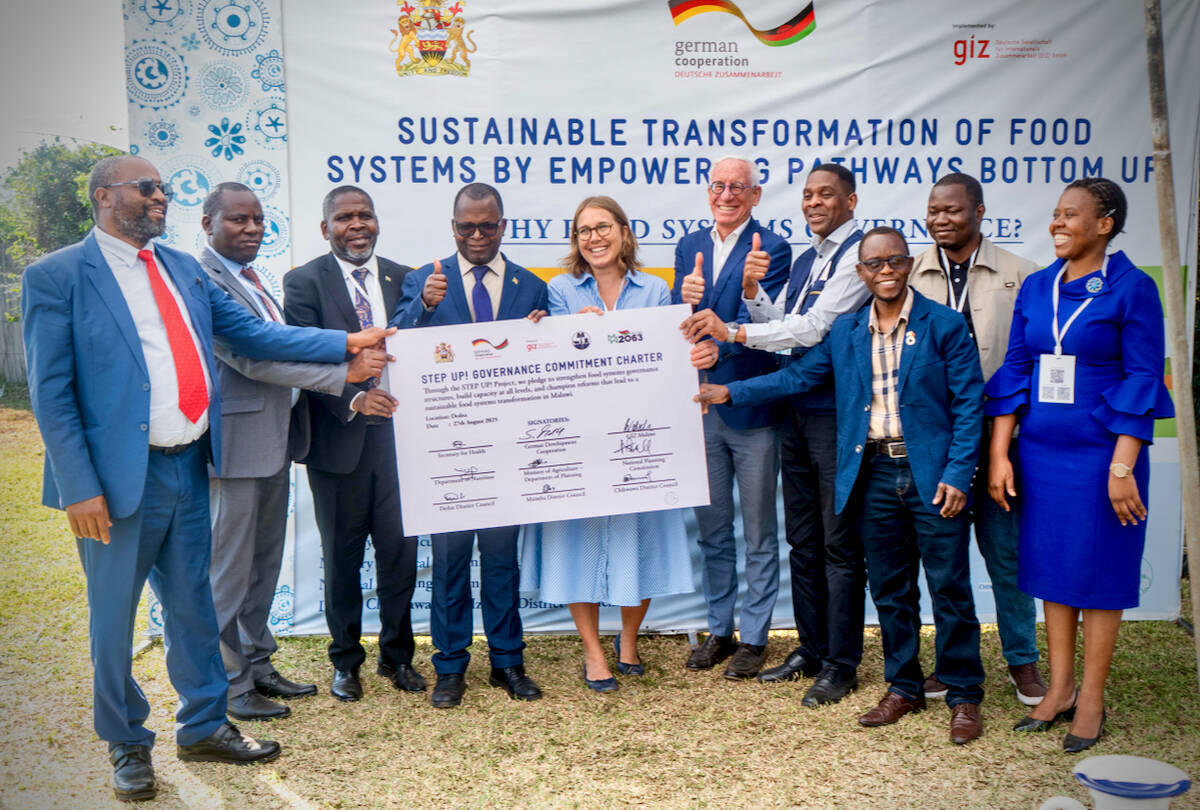
State institutions pledging to strengthen food systems governance to achieve the national pathways. (Dedza, Mzimba and Chikwawa District councils, Ministry of Health, Embassy of Germany, GIZ Malawi, Department of Nutrition, National Planning Commission, Ministry of Agriculture, and STEP UP project L to R) ⎮ Visual: ©GIZ
Contact
Fyness Chingoma, fyness.chingoma@giz.de
