
30 Million Tons of Opportunity: Rethinking the Cashew Apple
How discarded cashew apples are helping women entrepreneurs build new food and cosmetics businesses in West Africa
The Added Value of This Article
Hover over to have a look!Value add for readers
-
If you work in agricultural value chains: The example shows how innovation can start by looking differently at existing crops and by-products already present in local farming systems.
-
If you support women entrepreneurs: the article illustrates how targeted training and market-oriented product development can help women-led start-ups move from ideas to products on supermarket shelves.
-
If you are interested in sustainable food innovation: Discover how cashew apples can be transformed into juices, sauces, cosmetics, and other products that fit everyday consumer demand.
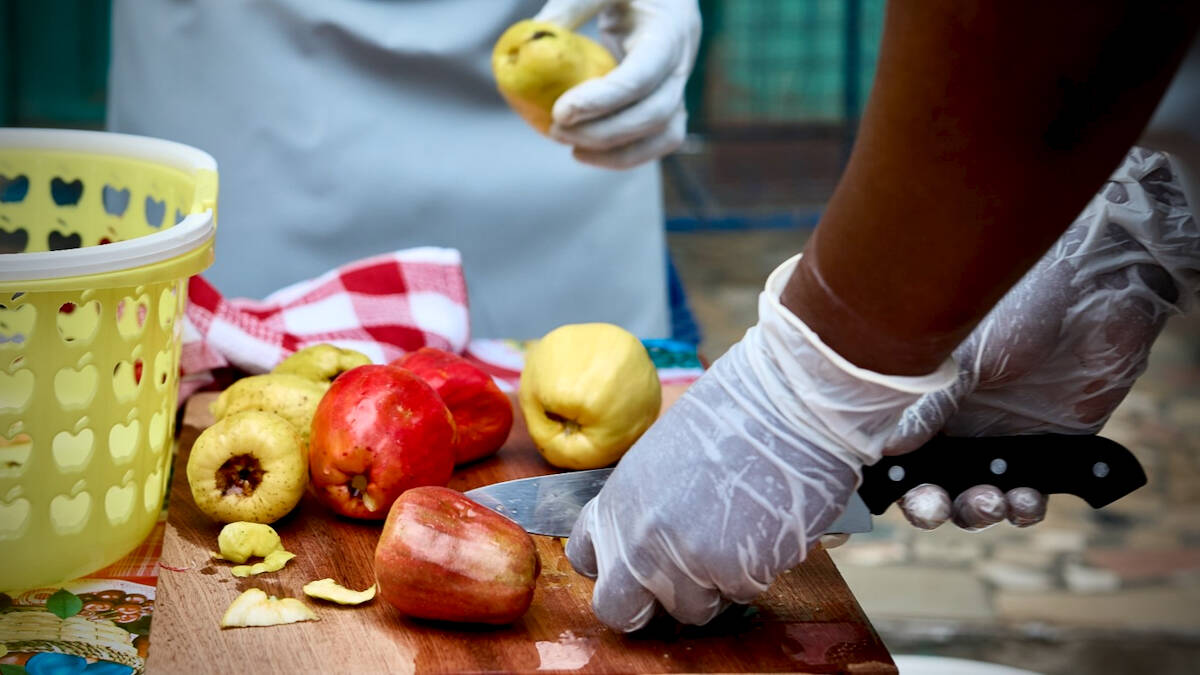
Cashew apples being prepared for processing as part of
new product development by local entrepreneurs. ⎮ Photo: © GIZ
Every year, African cashew farms produce around three million tons of raw cashew nuts. Yet for every nut harvested, the cashew apple is typically discarded. Across the continent, more than 30 million tons of these apples go to waste each year.
What many producers see as waste is in fact a nutritional powerhouse. Cashew apples contain more vitamin C than oranges and are rich in antioxidants. For the project Market Oriented Value Chains for Jobs and Growth in the ECOWAS region (MOVE), these apples represent a major opportunity for local value creation and rural entrepreneurship.
Instead of leaving the fruit unused, entrepreneurs — many of them women — are beginning to process cashew apples into juices, jams, wines, sauces, and natural dyes, turning a neglected resource into new products for local markets.
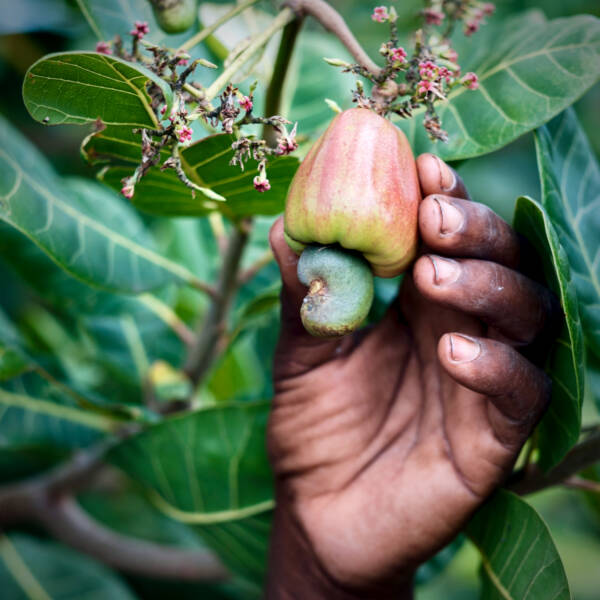
The cashew nut hangs beneath the cashew apple—yet while the nut is harvested,
the apple often goes unused. ⎮ Photo: © GIZ
A Local Resource with Entrepreneurial Potential
While the global cashew trade is largely dominated by exporters focusing on the nut, the cashew apple remains a resource tied to local communities. Because the fruit is highly perishable, it cannot easily enter global supply chains, which opens opportunities for local processing businesses.
This is where women entrepreneurs are increasingly taking the lead.
Through MOVE’s technical and financial support, 195 women-led start-ups have been introduced to innovative agro-processing techniques. Participants receive practical training along the entire value chain — from harvesting and quality control to branding, product development, and marketing.
Theresah Nakyelle, owner of Johntess Catering Services in Ghana, was one of the participants. “I was amazed by what I learned,” she says. “Before the training, I supplied only plantain chips. Now I’ve started producing cashew shito (a popular Ghanaian spicy sauce with high demand), and the demand is high. Including cashews has significantly increased my profit margin.”
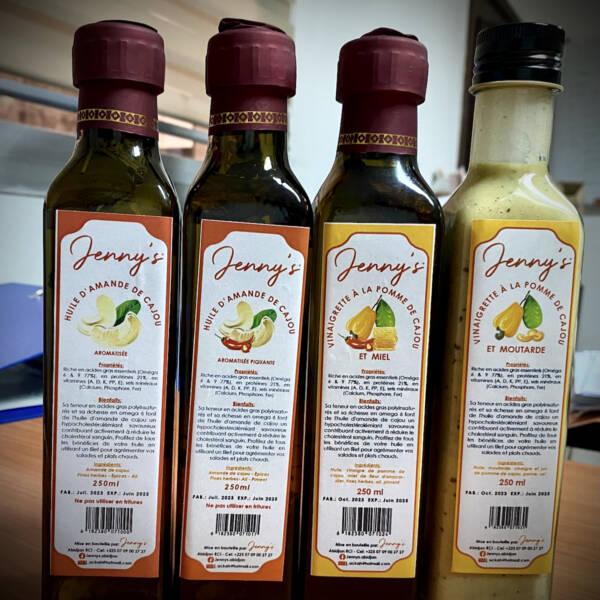
Cashew apple vinaigrette—one example of new food products
developed from the often-discarded fruit.⎮ Photo: © GIZ
Innovation Requires Market Orientation
Developing a new product is only the first step. Success in the market requires understanding consumer demand.
The project Market Oriented Value Chains for Jobs and Growth in the ECOWAS Region therefore supports entrepreneurs not only with processing skills but also with market-oriented product development. Businesses receive guidance on identifying market expectations, conceptualizing products, testing ideas, and developing branding strategies.
So far, 19 innovative cashew-based products have successfully reached the market. The diversity is striking:
- Food products: From refreshing juices to sauces such as cashew shito and other culinary innovations.
- Cosmetics: Body creams, soaps, and hair oils derived from cashew by-products.
- Culinary inspiration: MOVE has developed a recipe book showcasing the culinary diversity of cashews to encourage local consumption.
A New Way to Use Local Resources
The initiative highlights a broader shift in perspective, looking differently at existing agricultural resources.
Instead of searching for imported products, entrepreneurs are discovering opportunities within crops that already grow locally. Cashew apples, once left to rot, are becoming ingredients for snacks, beverages, and household products that fit everyday consumer habits.
Today, these products are no longer just project ideas. They are already available in supermarkets, online platforms, and at international trade fairs.
Buying a bottle of cashew juice or a jar of cashew shito, therefore does more than introduce a new flavor. It also supports local entrepreneurship, new market opportunities, and stronger community economies.
Additional information
- Website of the MOVE project
- Success Story Cashew Apple Training (PDF, 2.1 MB)
- Success Story New Product Development (PDF, 1 MB)
Contact
- Sonia Lehmann, Head of Component, Sonia.Lehmann@giz.de
- Elisabeth Helle, Junior-Communications Specialist, Elisabeth.Helle@giz.de
