12 Years of Agricultural Innovation: Lessons from the Green Innovation Centres
A new compendium consolidates practical experience from 16 countries on strengthening agricultural production, value chains, and rural incomes
The Added Value of This Article
Hover over to have a look!Value add for readers
What You Can Take Away from the Compendium
- Learn how knowledge-based, technical, input-based, and organizational innovations were applied in different contexts.
- Country examples illustrate how approaches were adapted to local conditions and value chains.
- The documented experiences highlight both successes and challenges.
- The compendium links to manuals, factsheets, training materials, videos, and learning tools for deeper exploration.
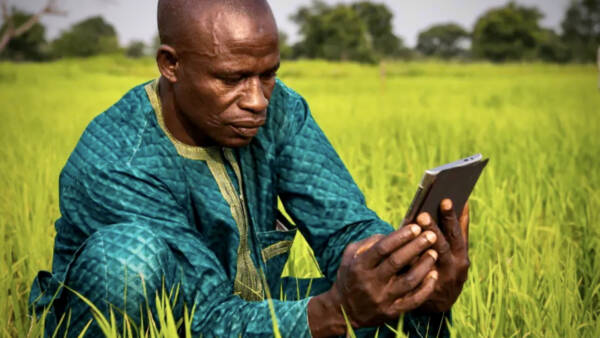
Photo:© GIZ
The compendium highlights what worked, what changed on the ground, and what others can learn from it.
Across Africa and Asia, farmers, entrepreneurs, and rural communities face growing pressure: climate shocks, market volatility, and rising demands on agricultural production systems. Addressing these challenges requires practical innovations that strengthen both production and livelihoods.
Over the past twelve years, the Green Innovation Centers in the Agriculture and Food Sector have worked with local partners in 16 countries to test and scale such approaches. Their experiences — successes, lessons learned, and practical innovations — are now brought together in a new compendium that consolidates the program’s knowledge and results.
Rather than presenting a single narrative, the compendium serves as a structured knowledge resource that documents how different types of innovation contributed to improving agricultural production, strengthening value chains, and expanding income opportunities for rural communities.
Turning Field Experience into Practical Knowledge
Throughout the implementation period, the work of the Green Innovation Centers was firmly rooted in rural areas where issues of food security, income generation, and economic opportunities were most pressing.
Working closely with government institutions, research organizations, civil society, and the private sector, the initiative supported innovations across agricultural value chains. These ranged from improved production methods to stronger market linkages and new opportunities for local enterprises.
Over time, many of these approaches contributed to measurable progress. Evaluation studies and endline surveys point to clear qualitative improvements in production systems, value chain development, and income generation for participating stakeholders.
Achieving these outcomes across very different regional contexts required strong collaboration. A broad partner network — built over more than a decade — played a key role in adapting innovations to local conditions.
A Resource for Learning and Future Initiatives
The compendium brings together these experiences in a format designed for practitioners, policymakers, and development professionals. It serves two main purposes:
- Documenting practical experience — including successes, challenges, and lessons learned from implementation
- Supporting organizational learning within GIZ and partner institutions
As the largest project under the German development cooperation initiative Transformation of Agricultural and Food Systems (SI AGER), the Green Innovation Centers generated extensive experience that can inform future agricultural development programs.
By consolidating this knowledge, the compendium helps ensure that lessons from the initiative remain accessible and usable beyond the project lifecycle.
A Modular Reference Across Key Areas of Work
The compendium is structured as a modular reference resource that allows readers to explore different topics independently.
The first section focuses on thematic areas of work, outlining the approaches and activities used to support agricultural transformation. The second section provides insights into the 16 country packages, illustrating how innovations were implemented and adapted on the ground.
Additional link boxes throughout the publication guide readers to additional knowledge products such as:
- manuals
- factsheets
- training materials
- self-learning courses
- videos and other resources
Some materials are available internally within GIZ, while others are publicly accessible.
The annex also includes fact sheets summarizing the results of the global endline studies, both at overall program level and for each country package.
Video: 12 Years of Innovation in Practice
The video highlights how different types of innovation supported agricultural development across the program’s partner countries. These include:
- Knowledge-based innovations such as training, advisory services, and coaching for farmers and entrepreneurs
- Input-based innovations that improved access to seeds, inputs, and irrigation solutions
- Technical innovations introducing new machinery and production technologies
- Organizational innovations strengthening farmer groups, financial associations, and local institutions
Examples from Zambia, Mali, India, and Burkina Faso illustrate how these approaches helped farmers and rural businesses improve productivity, strengthen financial structures, and expand economic opportunities.
Across the program, more than 2.25 million smallholder farmers received training, over 77,000 employees in agricultural businesses were supported, and more than 22,000 new jobs were created — two-thirds of them for young people.
Explore the Compendium
The Green Innovation Centre’s Compendium is available in English, French and German and provides a consolidated overview of more than twelve years of agricultural innovation and collaboration.
It offers practitioners and policymakers an opportunity to explore lessons learned, understand how different innovations were implemented, and draw inspiration for future initiatives.
📄 Download the compendium (PDF, 29MB)
